The Compressed Method
About James
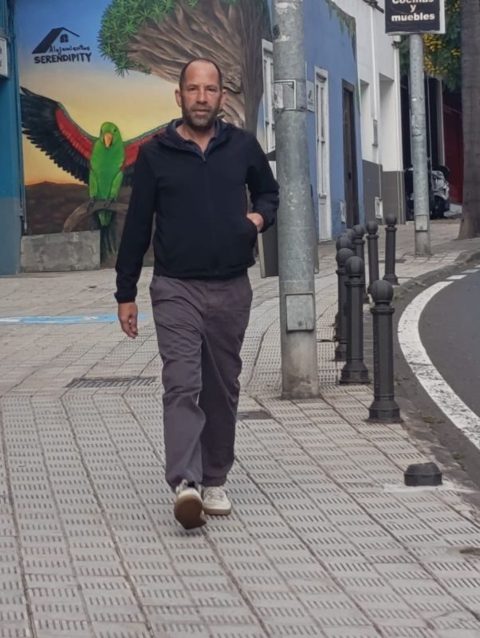
Developer of the Compressed Method — a personal, experiential framework, not a clinical protocol
James's work began with a personal question: how much of himself was still available after years of accumulated load, change, and alcohol use?
Why "Compressed"
The name started with James's body — the stiff, slab-like areas he found across it, a feeling of being held, flattened, and cased in. But as he paid closer attention, he noticed the same feeling wasn't confined to fascia. It showed up in his work too: years of desk- and screen-based demands, an always-available era of office and internet life, that left him feeling boxed in long before he ever thought about his body specifically. And it showed up in what he used to cope with both — alcohol, which in his own case became one way of avoiding what he was finding difficult to face physically and emotionally.
James doesn't present these as three separate problems that happened to occur in the same life. In his own experience, they were facets of one wider pattern — compression showing up in the body, in work, and in what he put into himself to manage it. He is not claiming this is how it works for every man, but he has met and spoken with men who describe parts of a similar pattern, often without much language for it.
Fascia is where this site starts deliberately, not because it's the only piece, but because it's the most concrete: something a man can notice in ordinary life and describe in his own words, before considering whether the same pattern shows up anywhere else in his life. That's why compressed.guide sits as the lead entry point into the wider male.guide network, rather than a standalone topic on its own.
The Three Pillars
Body
After years of chronic tension and postural collapse, James developed an observational framework for fascia based on direct personal experimentation. The result is the Compressed Method — his own personal, experiential framework for people who want to examine their own movement and tension patterns. It is not a medical treatment, diagnostic system, or clinically validated method.
In James's experience, long-term compression created stiff, slab-like areas across his body. Many men in their 40s–60s describe something similar: a sense of being held, cased, or flattened by years of load.
Over time, James recorded changes in how he experienced movement, comfort, posture, sensation, and physical availability. He also noticed changes in ordinary details — how certain areas felt, how he carried himself, and how much attention physical discomfort demanded during the day. These are his personal records, not clinical measurements or evidence that another person will experience the same changes.
James also describes a steadier physical baseline: less bodily agitation, better sleep at times, and more patience in ordinary life. He does not present this as a treatment for mood or mental health. It is his observation that when his physical discomfort felt less dominant, daily life sometimes felt easier to manage.
See the self-checks that reflect some of the observations James has used in his own reflection — alongside a few things anyone can notice in the everyday world, without touching anyone at all. The movements library takes this further, with fifteen gentle options he's found useful for varying how his body carries load.
Work
James spent many years working in international travel, recruitment, and hospitality — including a regional role at British Airways early in his career, and a corporate travel management role for Siemens across Europe, before later running his own international travel and hospitality recruitment business. Across that work, he saw how uncertainty, redundancy, and changing travel markets affected people's working lives.
He built the company around flexible working arrangements before remote work became commonplace, and came to value structure, clear communication, and trust across distance.
He is open about the difference between interviewing others and being interviewed himself: despite years spent interviewing candidates, he prefers to rehearse before an important interview. What he values most is helping a man find clear language for what is actually going on.
Many people choose hospitality despite modest pay because of the lifestyle, movement, people, and sense of place it can offer. James sees that as proof of something he'd already come to believe: money enables purpose and connection, but it was never the point on its own.
James runs Dry Holidays SL, the company behind this network. The work is practical, direct, and built for everyday use — the same standard he holds his own life to.
Sobriety
James's relationship with alcohol is part of his personal history, not a sales story or a model for another person's recovery. He sees the decision to stop drinking as one important part of a longer period of reassessment, alongside changes in work, environment, routine, and physical awareness.
COVID was the final push he needed to stop. He stepped away from work and spent time in residential support while reassessing how he was living. Looking back, he describes that period as more serious than ordinary burnout. This is his personal interpretation of a difficult period, not a clinical diagnosis.
It was during that time that a connection became clear to him: what he'd been struggling with wasn't really about money. It was closer to an addiction to work and success itself, and alcohol had become bound up with that in ways he hadn't fully seen before. This is his own interpretation of his own experience, not a diagnosis, and not a claim about how work, success, or alcohol connect for anyone else.
He built and ran a BnB in Tenerife for five years afterward — not just as a business, but as a structure. It gave him income while he found his feet, honest guest feedback as a mirror, and the discipline of running something day to day. It's also where he brought his own use of social media and screens under control — a gradual, five-year reduction, to the point where he's now genuinely in charge of it, not the other way round.
The Five Lenses
- Movement — how movement feels in ordinary life
- Presence — noticing sensation and physical availability
- Purpose — a sense of direction in daily choices
- Safety — feeling steady enough to act with care
- Input — what a person consumes and what influences his baseline
These are James's personal lenses for reflection, not medical measures, ratings, or a scoring system.
A wider network, introduced carefully
compressed.guide is the Fascia Family hub within the male.guide network — the first live entry point, not the whole picture. A man may arrive with one physical concern while also carrying work pressure, changing relationships, or questions about who he's becoming. In James's own experience, one area of life could sometimes affect how another felt. That does not mean every concern has the same cause, or that a physical issue explains everything else.
Further specialist guides within the Fascia family will be introduced carefully, as they're ready. Learn about male.guide.
What this is — and is not
James's experience is the origin of this site, not a diagnosis of yours. The material is educational and observational. It does not tell you what is causing pain, whether a movement is safe, or what treatment you need.
If symptoms are sharp, escalating, radiating, neurological, breathing-related, post-operative, or otherwise unexplained, seek appropriate professional care.
Observations
Personal observations from direct experience.
"I remember my early 20s as a time with no real issues at all. Things started to change from around 26, and I didn't do much about it for years. By the time I was around 30 I'd accepted something was wrong — I saw professionals, had scans, and used alcohol as a way of coping with it. Real, focused, documented work on this only began when I turned 50. What changed in six months of that focus outweighed the twenty years before it. I've gone further than I remember being even at my own physical peak in my early 20s — entirely self-taught, having watched only a handful of videos on fascia. This is my own timeline, not a typical or guaranteed one for anyone else."
— James's personal reference point
Spend a day with me
I don't use social media much, and I'm not interested in building a persona online. But a single day, in Tenerife, observing how I actually live, is something real I can offer — not coaching, not therapy, just a real day of a life built around dignity and purpose, for you to take from however it's useful. Some of what you'd notice might fit your own life now, some only years later, some never — and that's fine. I'm not offering myself as a template to copy.
This isn't bookable yet. If it's something you'd want, write to [email protected] and tell me why.